
Welcome to the Mathematical World!
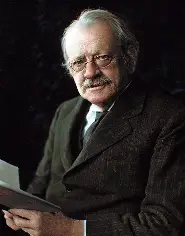
J.J. Thomson
Discoverer of the Electron
Joseph John Thomson (1856–1940) was a British physicist who fundamentally changed our understanding of the atom. Born in Cheetham Hill, Manchester, England, Thomson displayed early brilliance in mathematics and science. He became a professor at the Cavendish Laboratory in Cambridge, where his experiments in cathode rays led to one of the most significant discoveries in modern physics: the electron.
Discovery of the Electron
In 1897, Thomson conducted experiments with cathode ray tubes and observed that the rays were deflected by electric and magnetic fields. He concluded that the rays were composed of negatively charged particles, which were much smaller than atoms. He called these particles “corpuscles,” now known as electrons.
Thomson estimated the charge-to-mass ratio of the electron as:
\[ \frac{e}{m} \approx 1.7588 \times 10^{11} \ \text{C/kg} \]He also measured the electron's charge \( e \) using experiments similar to Millikan's later, allowing calculation of its mass \( m \) using:
\[ m = \frac{e}{(e/m)} \]This discovery proved that atoms were not indivisible, as previously thought, and introduced the concept of subatomic particles.
Plum Pudding Model
Following the discovery of the electron, Thomson proposed the plum pudding model of the atom, in which electrons were embedded within a positively charged “soup” or matrix, similar to plums in a pudding. This was one of the earliest atomic models attempting to explain the internal structure of atoms.
A simplified representation of the model can be described as:
\[ \text{Atom} = \text{positively charged sphere} + \sum_{i} e^{-}_{i} \text{(electrons embedded)} \]Although later refined by Rutherford and others, this model was critical in moving science beyond the idea of indivisible atoms.
Experiments and Methods
Thomson’s work involved precise measurements using cathode ray tubes, electrometers, and magnetic deflection apparatus. He measured the deflection of cathode rays under varying electric and magnetic fields to determine their properties, setting new standards for experimental physics. He also investigated the conduction of electricity in gases and the behavior of ions.
Recognition and Awards
For his pioneering work, Thomson received numerous accolades, including the Nobel Prize in Physics in 1906 for his theoretical and experimental investigations on the conduction of electricity in gases. His research influenced later atomic models and the development of quantum mechanics.
Legacy
J.J. Thomson’s discovery of the electron reshaped chemistry and physics by showing that atoms were made of smaller constituents. His experiments paved the way for the development of quantum theory, particle physics, and modern electronics. Thomson’s meticulous experimental approach and conceptual innovations make him a cornerstone in the history of science.
Visualizing the Plum Pudding Model
In LaTeX, a schematic of the Plum Pudding Model can be depicted as:
\[ \begin{array}{c} \text{Positively charged sphere} \\ \bullet \quad \bullet \quad \bullet \quad \bullet \quad \bullet \\ \text{Electrons (negative) embedded inside} \end{array} \]This simple diagram shows electrons scattered within the positively charged atomic matrix.

All rights reserved by the Mathematical Unity
Contact: +8801400044645
Email: mathematicalhorse1453@gmail.com
Our Discord Server: Mathematical Unity [Ulus Riyadiyat]